
Pedicularis

Discussing Pedicularis in the Herbs with Rosalee Podcast
Species Differentiation, Common Names, & Taxonomy
The genus Pedicularis was traditionally included in the Scrophulariaceae. All plants previously in the Scrophulariaceae that are known to be partly or fully parasitic on the roots of other plants were moved to the Orobanchaceae.
A common name for the genus is 'Lousewort'. Sources conflict in why this common name became associated with Pedicularis, some based on the mistaken belief that it could repel lice and similar parasites from livestock, others the opposite, saying that livestock would become louse-ridden when grazing in pastures with Pedicularis (specifically the Eurasian Pedicularis palustris).
Regarding the common name 'Wood Betony', I find that botanists, conservations, and ecologists in my region tend to prefer this name when referring to Pedicularis canadensis. However, herbalists tend to refer to Pedicularis canadensis as 'Pedicularis' since there is another medicinal herb, Betonica officinalis (a.k.a. Stachys officinalis) which also has 'Wood Betony' as its common name. Since I am an herbalist first and foremost, I tend to refer to either species of Pedicularis found in my region as 'Pedicularis' and reserve the other common name 'Wood Betony' for the unrelated non-native medicinal herb, Betonica officinalis.
Chicago Region species
- Wood Betony (Pedicularis canadensis) – Native, C=9 – aka, Canadian Lousewort, but my highest preference and a trend I'd like to set in the herbal world is the name, 'Let's-get-loosewort'.
- Swamp Lousewort (Pedicularis lanceolata) – Native, C=10 – aka, Fen Betony
Non-bioregional species
I highly recommend picking up herbalist Michael Moore's Medicinal Plants of the Pacific West for an in-depth discussion of the western species of Pedicularis, which include P. centranthera, P. racemosa, P. densiflora, P. groenlandica, P. attollens, P. procera, and others. Christa Sinadinos also has a great write-up in her Essential Guide to Western Botanical Medicine.
Habitat & Identification
Genus Level:
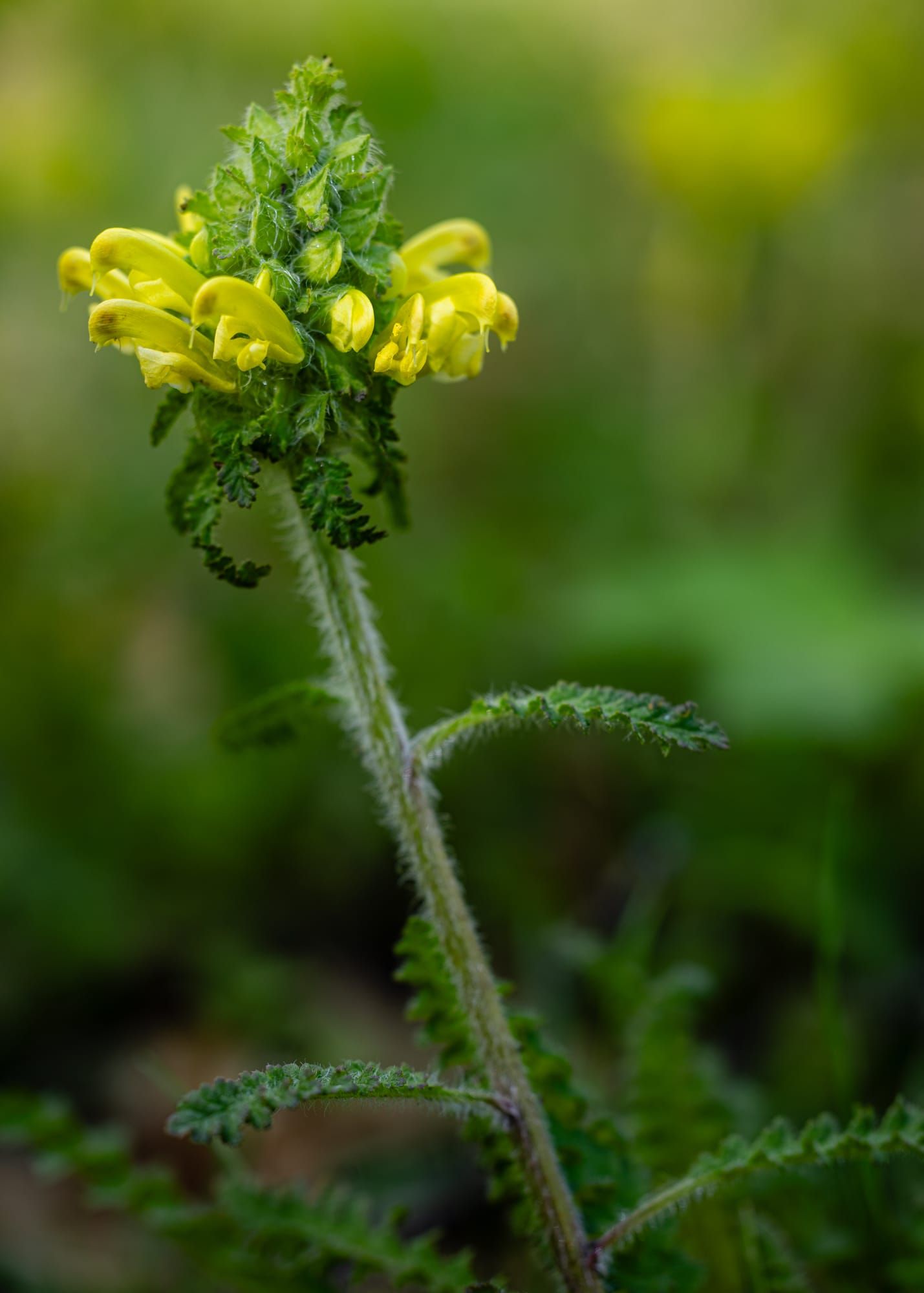
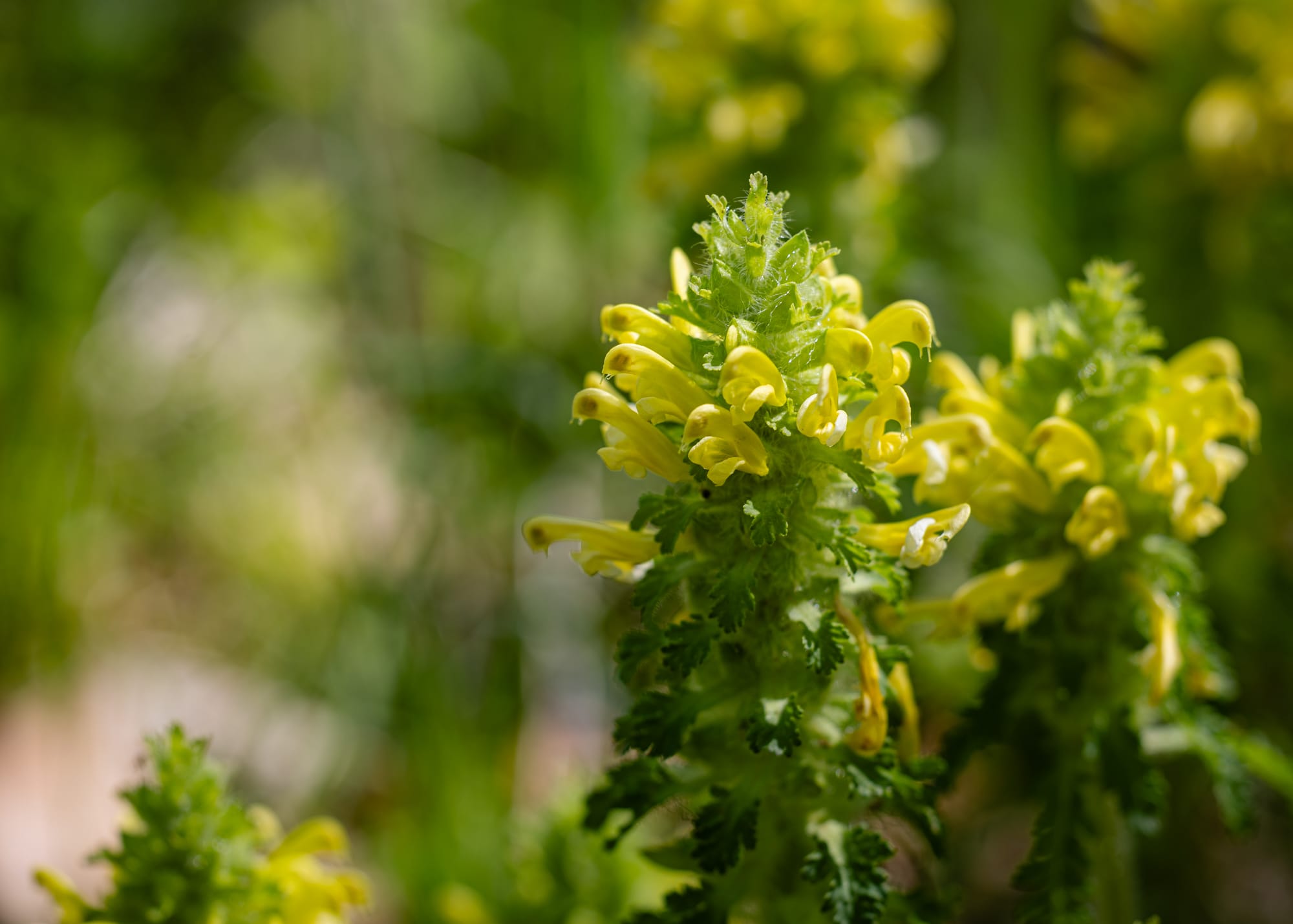
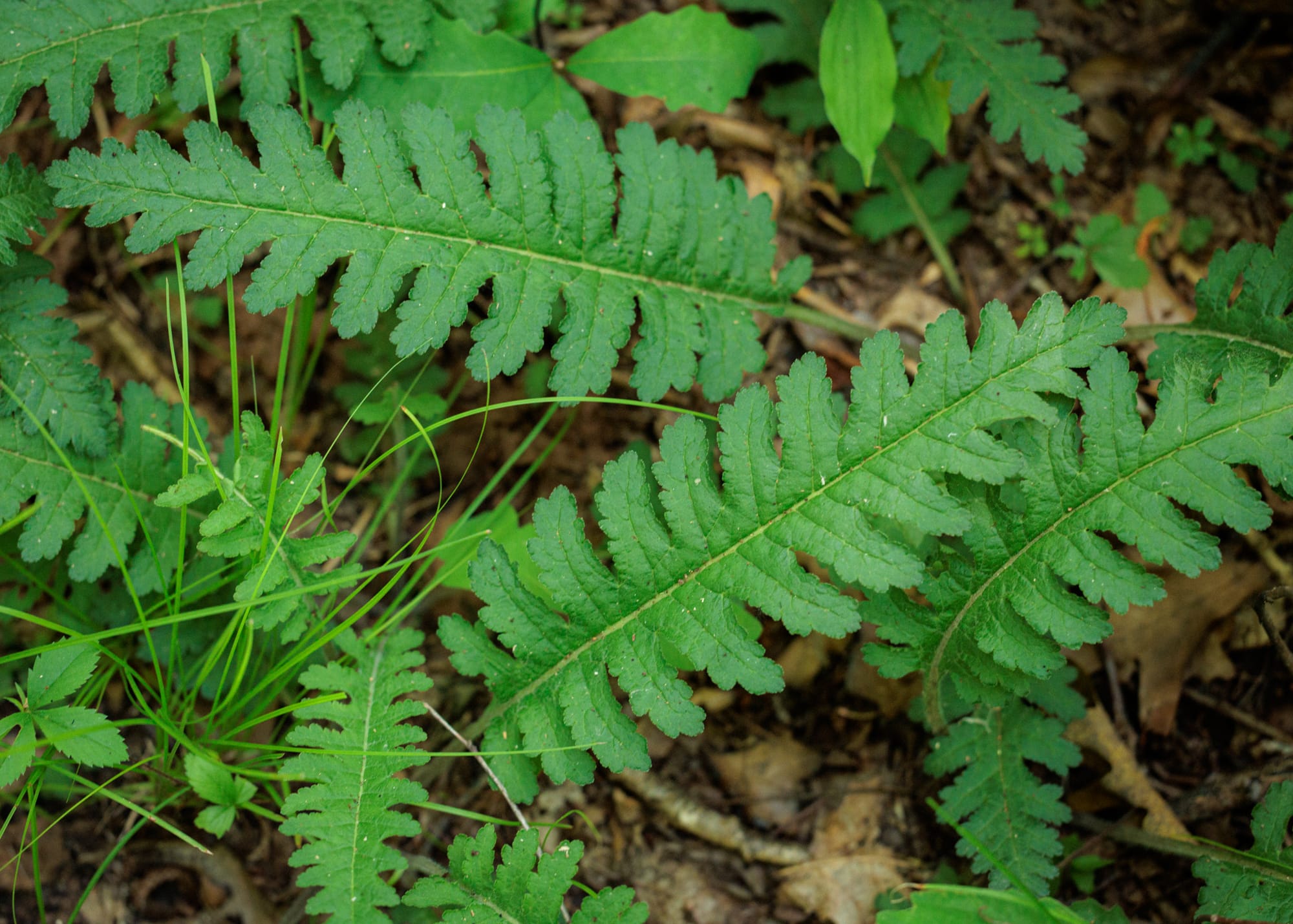
Hemiparasitic perennials with alternate or opposite fern-like (pinnatifid) leaves; flowers in an elongated or crowded inflorescence (raceme).
Species Level:
- Wood Betony (Pedicularis canadensis): Stems usually villous (shaggy-haired), the leaves alternate; plant ending bloom long before the end of July. Occurs in mesic to dry prairies and savannas/barrens on fine to coarse textured soils. See full botanical description here.
- Swamp Lousewort (Pedicularis lanceolata): Stems nearly or quite glabrous (smooth/hairless), the leaves opposite or subopposite; plant beginning bloom after the end of July. Occurs in fen ecosystems, marshes, wet prairies, and sedge meadows. See full botanical description here.
Both species have a very high C-Value, which tells us that they have a lower tolerance to environmental degradation, and that the areas they are typically found in are about as close to a remnant ecosystem (likely savannah / prairie) that we tend to see in the Chicago Region.
Ecology, Sustainability, & Harvesting
Ecology
Early in the spring before the canopy foliates out, you can begin to see the prehistoric looking fern-like leaves of Pedicularis emerging – and you typically find that the leaves are a beautiful carmine red at this stage, which is not what they look like later in the growing season.
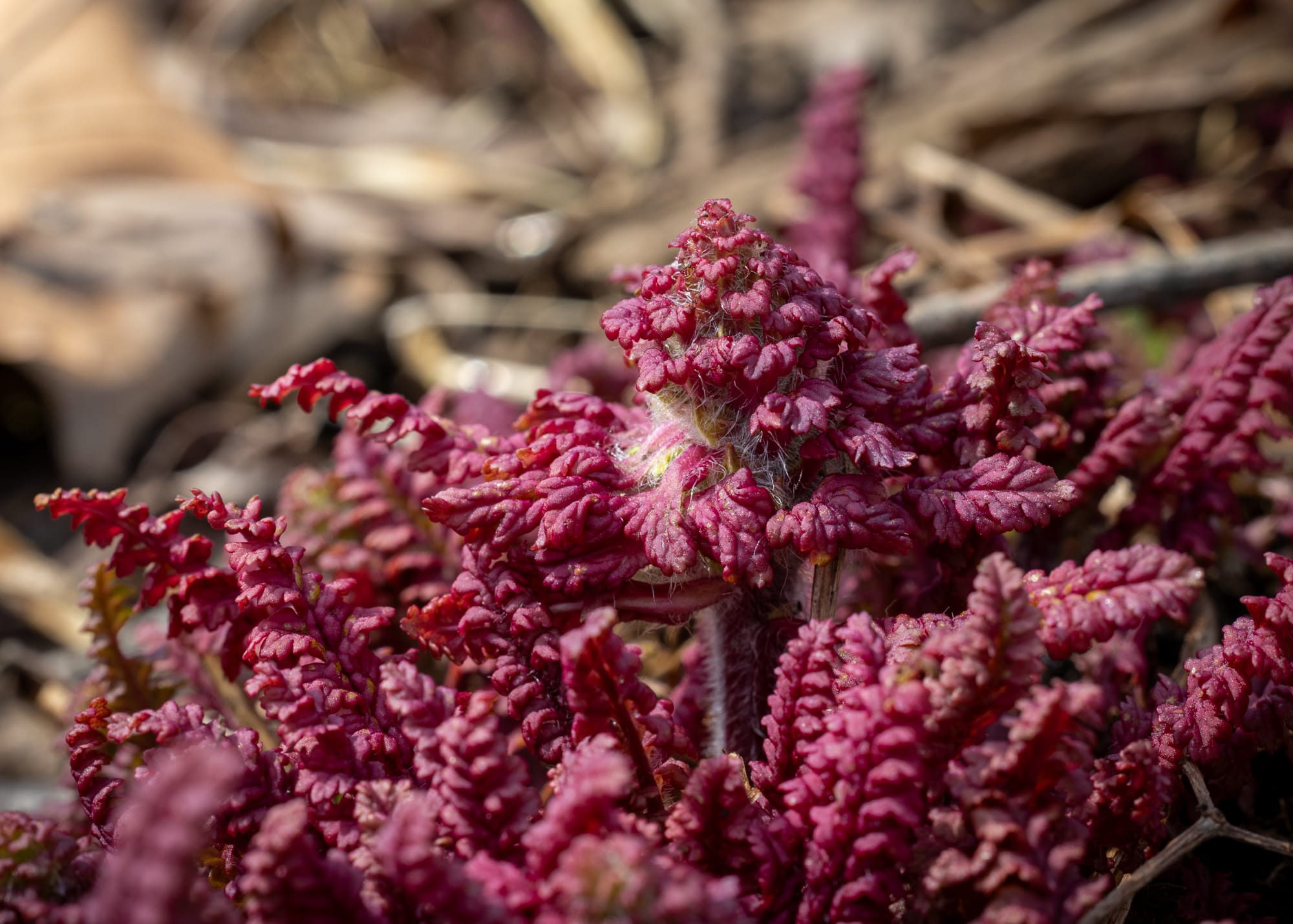
The red coloration is primarily due to the production of anthocyanin pigments, which can offer protective capacities in the context of harsh sunlight or cold, sunny winter days.
As the weather warms up a bit and the canopy starts to leaf out, there is more shade and the leaves turn a more familiar green.
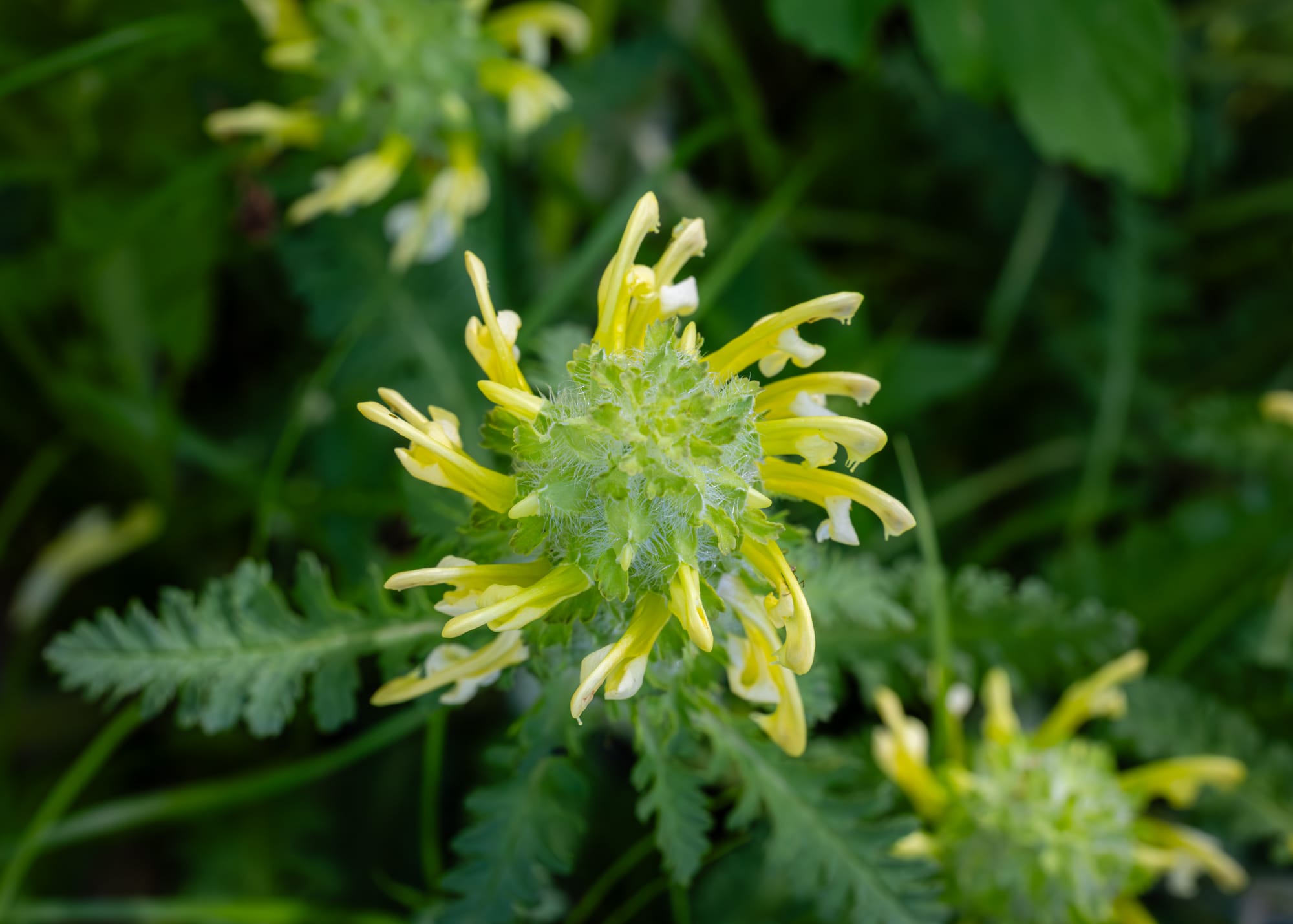
Importantly, Pedicularis is a hemiparasitic plant.
- Holoparasitc plants like Ghost Pipe (Monotropa uniflora) typically do not contain chlorophyll, cannot photosynthesize and therefore are unable to produce their own food, which means they require a host to parasitize off of in order to sustain their growth. Ghost pipe would be considered a 'mycoheterotroph' in that it consumes food made by certain kinds of fungi through mycorrhizal relationships.
- Hemiparasitic plants on the other, hand are autotrophs in that they can produce their own food through photosynthesis, but they often rely on host plants for additional nutrition. American Mistletoe (Phoradendron leucarpum) is another more obvious example of a hemiparasite.
Hemiparasitic plants reach out to other plants or fungi in their environnment through root structures called haustoria that grow into or around the tissue of the host to absorb water, nutrients, or other constituents to support their own growth.
Pedicularis in particular does a great job of drawing resources from the more assertive and aggressive plants in an ecosystem, limiting their growth and spread, reallocating those resources towards the benefit of the entire biotic community.
In particular, Pedicularis canadensis has been shown to reduce the above-ground growth of prolific prairie plants such as tall goldenrod (Solidago canadensis) and big bluestem (Andropogon gerardii), which are both native plants in the Chicago Region, but can easily dominate more highly conservative prairie plants that grow closer to the ground.
This creates space for more highly conservative plants that may not be able to tolerate the shade or pervasive spread of more assertive plants in the environment.
“It regulates the growth of other plants because it is a hemi-parasite. It tones down the more exuberant plants, the ones that tend to be more assertive. And it allows all the plants to play well together. It promotes biodiversity.”
– Eriko Kojima, long-time steward of Somme Prairie Grove, on the ecosystem services of Pedicularis canadensis
Sustainability
This plant has significant sustainability issues in the Chicago Region, so should only be harvested with patience, humility, and care. First get to know the ecosystems and plant communities where you are likely to find Pedicularis growing.
Come back to this place over and over again for a year or two to ensure there are plenty of large self-sustaining patches where you can gather. Generally I am quite an open book in terms of sharing knowledge about plants and herbalism, however, in the case of plants like Pedicularis where there is a strong potential for overharvesting, I don't believe it's responsible to share the places where I forage so I may lessen the impact on a particular plant community and encourage others to build relationship with a particular place before they begin harvesting.
When I do bring students to meet this plant, it's typically in areas of the Cook County Forest Preserve where it's illegal to harvest, with strong stewardship communities who are monitoring the health of the ecosystem. My hope is that, through introducing students to this wonderful plant in these particular contexts, they can learn about the importance of stewardship, ethical wildcrafting, and also be aware that a strong group of stewards has their eyes on the land.
Even better if this inspires students to volunteer with local stewardship groups so they can actively support the sustainability and health of Pedicularis within a particular plant community, which in turn will support the health of the ecosystem as a whole.
There are further safety considerations when harvesting Pedicularis, specifically related to the hemiparasitic nature of this plant. See the 'Safety Information & Cautions' section below for more details here.
Medicinal Virtues & Applications
Ethnobotany
Regarding Pedicularis canadensis in particular, Moerman's ethnobotanical tome indicates that the herb is used by Catawba, Cherokee, Chippewa, Iroquois, Menominee, Meskwaki, Mohegan, Ojibwa, and Potawatomi for various purposes, primarily related to supporting the gastrointestinal tract and as an aphrodisiac (with the Chippewa utilizing the herb as an orthopedic aid for soreness of limbs, which overlaps with the primary usage of the herb among western herbalists).
Of course, accounts drawn from Moerman's ethnobotanical reference act as a starting point for those interested in further study of the historical and ongoing use of particular plants by indigenous peoples, as these accounts are extremely limited, lacking nuance, and removed from their context.
Regarding the specific usage of Pedicularis canadensis by the Potawatomi nation,
Wood Betony "cagacka'ndawesoanûk" (flying squirrel tail). The Prairie Potawatomi word for this plant was "mûkwa'mûk" or "makwama'wûc" (bear weed). The Forest Potawatomi name, the fore part of which means "flying squirrel", represents the use again of that name to commemorate a famous Potawatomi chief who has long been dead. The use of the root of this plant is rather different in the two tribes. The Forest Potawatomi use it as a physic, whereas the Prairie Potawatomi use it for reducing both internal and external swellings. Among the whites (sic), the entire plant is used by eclectic practitioners for its tonic, sedative, astringent and vulnerary properties.
– Huron H. Smith, Ethnobotany of the Forest Potawatomi Indians, p. 83
Common usage among contemporary western herbalists
Pedicularis is a cooling skeletal muscle antispasmodic relaxant that supports loosening of muscle (specifically skeletal muscle) rigidity.
Remember that skeletal muscles are those that you can generally move voluntarily, while smooth muscles are those that you don't consciously think about moving – for example you don't have to consciously direct food through your digestive tract, this is an involuntary process called 'peristalsis' conducted by smooth muscle and coordinated by the autonomic nervous system.
For the most part, antispasmodics utilized by herbalists tend to be smooth muscle antispasmodics, which are incredibly useful, but it is also helpful to have an antispasmodic with a stronger affinity for skeletal muscle where tension is an overarching presentation. Enter Pedicularis!
Musculoskeletal tension and spasm can arise from both overexertion and overactivity on one side of the spectrum and lack of movement due to chronic illness, mobility issues, or sedentary lifestyle on the other. Pedicularis can be supportive in both cases.
I will often include Pedicularis in formulas for clients who are ambitiously active, always on the move–running, yoga, biking, pilates, tennis, rock-climbing, boxing, all in a days work... you know the type. Rest tends to be marginal in their regimen, so overtime skeletal muscles become accustomed to tension. I find that Pedicularis can be supportive, especially to support these folks in cultivating rest. Although they may be suspicious of the relaxed feeling at first and potentially find the 'loosey' feeling a little bit off-putting.
Pedicularis is also supportive in managing muscle spasms for those with sciatica, spinal cord damage or herniated discs, chronic back pain, or recovery from musculoskeletal injury, often alongside herbs that support tissue integrity and repair, herbs to support connective tissue lubrication, anti-inflammatory herbs, and analgesic herbs.
Where headaches arise out of tension, Pedicularis can be particularly helpful:
Head: energy seemed to empty from the head by springing ever so gently upward and outward and almost floating back down to earth like falling leaves from a tree in autumn.
Despite the energy moving out and down from the head, the head was left ‘emptied’ with kind of a light and ‘floaty’ feeling - because heaviness is released the head feels like a balloon on a string.
Massage therapists or chiropractors may also find this herb particularly helpful to give before working on clients to reduce muscular guarding and generally loosen the musculature before working on them or making chiropractic adjustments.
Birthing mothers have also utilized Pedicularis in early labor with no negative effects on uterine contractions (ideally under the supervision of an informed birth worker).
While Pedicularis shines as a skeletal muscle relaxant, it is effective as a smooth muscle relaxant to a lesser degree, so other herbs like cramp bark, may be added to amplify this quality. I have never seen Pedicularis affect respiratory or digestive cramping, but does seem to help with uterine cramping, especially when combined with other smooth muscle antispasmodics with an affinity for uterine tissue. That said, the skeletal relaxant qualities seems to support systemic relaxation and thus better capacity to regulate breath and a shift towards the parasympathetic mode which indirectly seems to calm digestive upset.
Pedicularis also has no known effect on nerve pain, so combining with herbs like St. John's Wort or Sweetclover may be beneficial if nerve pain is present.
Nervine Qualities
At low to moderate doses:
Pedicularis offers a subtle nervine effect, which I tend to call upon for clients who are 'excessively awake', where anxiety manifests as tense fidgetiness, flightiness, or a disjointed presence in social situations.
In higher doses:
I've enjoyed this herb quite a bit in the past few years when I became a father and stopped drinking. There is a wonderful sense of presence and 'loosey-gooseyness' this herb can offer in higher doses that wonderfully replaces the usual alcohol inebriation one might desire at a party.
I included some observations below from a group blind tea tasting I conducted with a few of my students. The dose wasn't particularly high at this tea tasting, but sometimes the undivided attention devoted to an unknown herb's actions within the body can heighten the qualities of the herb a bit – and I feel these observations accurately portray how one might experience a strong dose of Pedicularis:
| Onset | Peak | Afterglow |
|---|---|---|
| Kind of a goofy giddiness that quickly resolved into a deep sense of relaxation and slowness. Downward moving energy, tension dissolving. | Kind of a ‘stoned’ feeling, a bit stupefying, feeling like mind is ‘emptied’ encouraging the body to be present in and explore the space around, but there is also kind of a light limp heaviness to the body as well. | Relaxed and somewhat ‘stoned’ but present, conversation meandering and philosophical, slow and yet still agile, a tendency to explore ideas more deeply. |
See more on the more psychospiritual virtues of nervine in 'The Ally' section below.
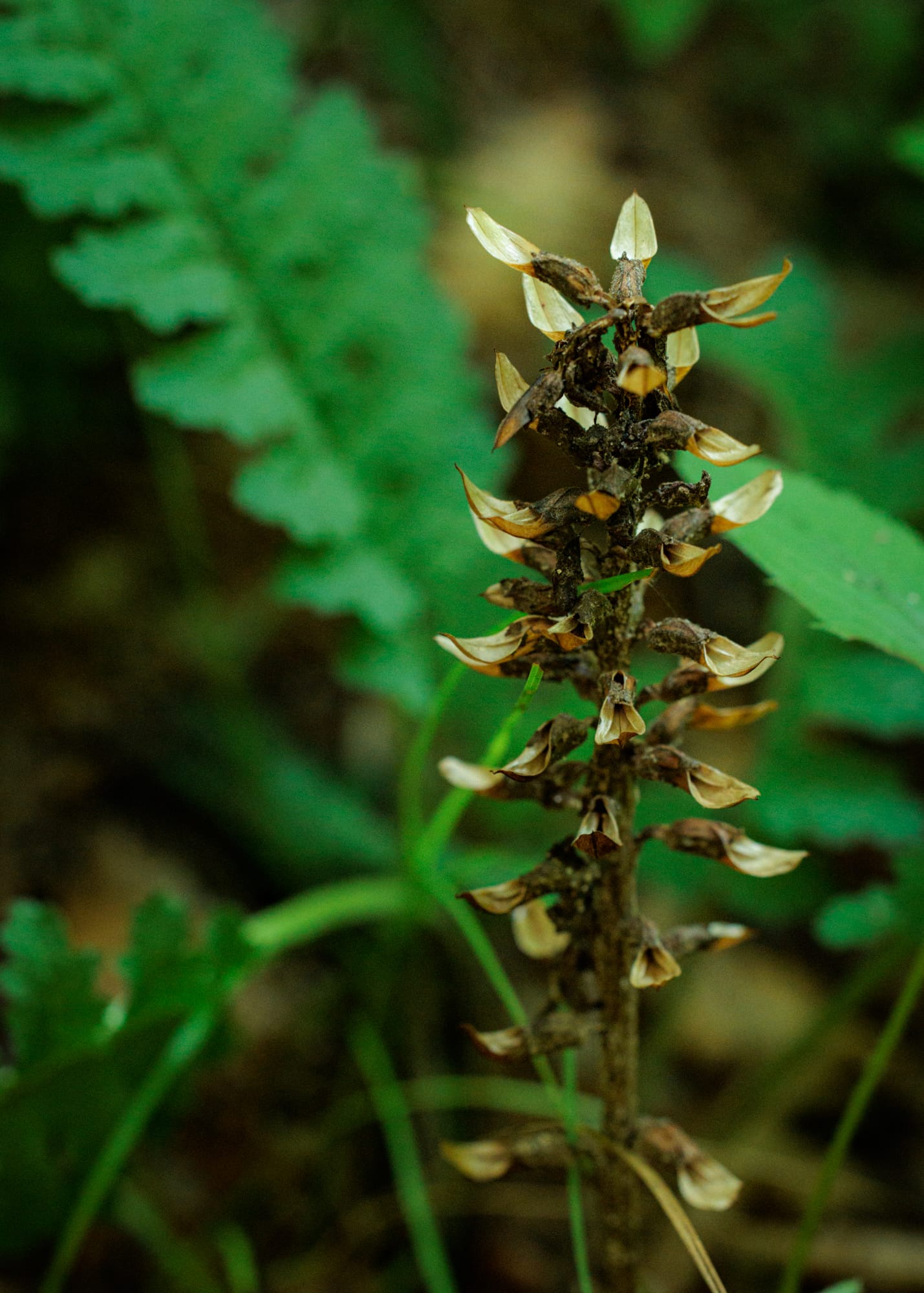
Aroma, Flavor, Pairings
In conducting tea tastings of Pedicularis with students, participants have reported the aroma of the herb as 'brothy', 'cabbage-ey', 'kind of skunky' and 'seaweed soup'. I am often reminded of a nice oolong tea (specifically Wuyi rock tea).
While the flavor isn't the most welcoming (a bit musty and an almost metallic bitter reminiscent of Blue Vervain), the herb can be used in relatively small doses (see below) to achieve its effect, and other more flavorful herbs can be used to balance the strong flavor of Pedicularis.
Pedicularis combines well with many other herbs.
Musculoskeletal Relaxants
- Black Cohosh (Actaea racemosa)
- Skullcap (Scutellaria lateriflora)
Herbs for lubrication of dry tissues
- Solomon's Seal (Polygonatum biflorum)
- Butterfly Weed (Asclepias tuberosa)
Herbs to support healing after injury and tissue regeneration
- Horsetail (Equisetum arvense)
- Teasel (Dipsacus spp.)
- Calendula (Calendula officinalis)
Calming Bitter Nervines
- Motherwort (Leonurus cardiaca)
- Skullcap would also be included here
- Blue Vervain (Verbena hastata)
Anti-inflammatory herbs
- Willow (Salix spp.)
- Turmeric (Curcuma longa)
- Ginger (Zingiber officinale)
- Quaking Aspen (Populus tremuloides)
Analgesic herbs
Note that many of these herbs can be quite sedating so you might benefit from creating two separate blends, a musculoskeletal relaxant blend (with the herbs above), and a pain relieving blend so you can use more relaxant blend throughout the day without becoming too sedated and then take a higher amount of pain relieving blend in the evening to support sleep.
- Arnica (Arnica montana)
- Wild lettuce (Lactuca spp.)
- Hops (Humulus lupulus)
- Valerian (Valeriana officinalis)
- Jamaican Dogwoood (Piscidia piscipula)
...or herbs that address mental/emotional/energetic tension like Agrimonia spp. (Agrimony) or Potentilla spp. (Cinquefoil).
The Ally
Coordinator and Integrator
"Pedicularis demonstrates the assets and benefits of a skilled community coordinator that brings the best out of everyone and helps to create a network of life that is stronger, more productive, and more resilient."
– Dara Saville, The Ecology of Herbal Medicine, p. 59
The lessons inherent in Pedicularis' capacity to influence the biodiversity of their plant communities (see the discussion on 'Ecology' above) deeply inform my overlapping roles as a teacher and herbalist, both of which include creating and holding space for people to explore ideas and notions around health and wellness, and to tune into the wisdom that their body holds.
When I teach, I sometimes encounter more assertive voices within the classroom space. Sometimes these can be actual students who are more comfortable with sharing out loud. Having students like this in a class is such a great gift, but if we only hear the voices of these students, we are missing a diversity of perspectives that may not feel they have the space to share their voice.
Pedicularis teaches me that in this role, it is important I redirect the energy of more assertive students to invite other student voices into the fold, engendering a more diverse range of perspectives and greater cross pollination of ideas.
On a more subtle level, Pedicularis supports me in tapping into the subterranean network of interconnection and interaction among students. I am inspired to ask: what is the unspoken thread weaving its way through the conversation of the group? And how can I follow this thread to direct the discussion towards greater depth, supporting students in coming to awareness of the topic from their own space of inner knowing? Where are the hidden strengths within this community, and how can these strengths act as nutrition that can be redistributed to those who may need a little more support?
As an herbalist, it is my responsibility to support the client in developing the capacity to listen deeply to the communications that come from the body.
During an herbal consultation with a client, we often discover signals that are louder than others: pain as an example. For clients who experience chronic pain, it is very easy to develop a sense of dissociation or alienation from the body, feeling at odds or not at home within their body. And this is understandable, but often that is because there are strongly assertive sensations that cover up the sensations of the body working to recover balance and working towards healing.
In my work as an herbalist, Pedicularis teaches me how to honor the pain my client is experiencing, while also supporting my client in listening for the subtler murmurs of a body that is working hard to restore integrity and balance to the whole.
Access to a Deeper Sense of Self
Pedicularis' ability to soften resistance within the body allows us access to the well of wisdom that arises alongside the vital force when it finally has the ability to flow where it was once confined.
Those who enjoy Pedicularis may also open up to a profound sense of goofiness, humor, and delight that allows one to explore bodily sensations with less judgement and more curiosity.
Take for example, this image that emerged for a student in a tea tasting of Pedicularis, when prompted about the direction the energy of the herb was flowing:
"Energy seems to empty from the head by springing ever so gently upward, outward, and finally settling downward. Like a wind lifting the branches a bit before loosening the leaves from a tree in autumn before floating back down to earth."
Pedicularis, uplifts, releases, and grounds us, loosening the 'leaves' we need to let go of, revealing the 'bones' of the tree – the inner structure that persists throughout all seasons of the life of the tree.
Attunement to Ancient Patterns of Relationship
Above we discussed how herbalists tend to use Pedicularis for individuals who are 'tightly wound' – like on a guitar, strings too tightly wound are prone to snap, Pedicularis loosens the strings on a person to allow for longevity, resonance, and attunement to patterns woven within, throughout, and beyond the human body.
When you stumble upon a nice patch of Pedicularis, you can nibble on the leaf or flower for a calming and relaxing effect on a walk. To me, nibbling on a Pedicularis flower feels like a magic spell that deeply tunes me into the place I'm walking.
Once you have found this patch of Pedicularis, you are likely already wandering in a remnant prairie or oak savannah ecosystem, with relationships and histories that predate colonization, histories that we desperately need to attune ourselves to if we are going to step up as stewards of this land.
Engaging with the Pedicularis is an invitation to this level of attunement.
Preparation & Dosage
Tincture
With P. canadensis, I will make a fresh plant tincture (1:2, 95%) of the aerial parts including leaf stem and flowers. Other species may be a bit more stemmy, in which case I would snip and reserve the flowering tops, and combine with leaves removed from the stem for the marc.
I've also made tincture from recently dried material that I found to be very effective, but I much prefer fresh plant tincture. I would not recommend tincturing plant material if you don't know how recently it was harvested (especially if the material lacks the vibrant hue of the original flower color and the color of the dried leaves have dulled significantly).
Tincture Dosage
Pedicularis is not likely to affect mental clarity or act as a sedative when taken at low to moderate doses throughout the day. The more 'stoning' nervine effects are more common when taking Pedicularis at moderate doses when there is little pain or tension present or at higher doses, generally when that effect is desired.
Common dosage ranges are between a half dropperful to three dropperfuls every hour to three hours depending on the dosage. Some folks may benefit more from lower doses more frequently throughout the day, some may benefit from larger doses less frequently. This is highly dependent pain level and frequency, co-occuring health issues, and constitution. Experiment with dosage and back off if you start to experience undesired "stoned" mental states, stupefying awareness or incoherence.
Infused Oil
Infused Oils of the recently dried aboveground parts can be very supportive as well, especially when combined with internal use of tincture. 1:5 in high quality, minimally processed, cold-pressed (ideally) olive oil or sunflower oil, utilizing a gentle heat method or cold maceration method.
Tea
Standard infusion methods apply here. 5-8 g in a pint jar filled with hot water and covered for a gentle nervine effect. 12-15 g in a pint jar filled with hot water and covered for deeper muscle relaxation and slightly more 'psychotropic' nervine effects. Shorter infusion times typically work well with this herb: ~15-30 minutes for a gentler infusion and 30-45 minutes for a stronger infusion. You can usually get 2-3 steeps from the same herbal material.
This herb combines well with other aromatic nervine herbs in tea blends at around 5-10% of the formula. The Potion of Delight recipe featured on the 'Herbs with Rosalee' podcast below is a great example:
Safety Information & Cautions
As discussed above higher doses of the tea or tincture can tip one into over relaxation of muscles and become more sedative in action. Get to know the right dosage for you and how you respond to Pedicularis before operating any fork lifts, or pulling an all-nighter drive to your long distance friend's house.
There is also not enough research to indicate whether or not this herb is safe in lactation, so either avoid the herb entirely while lactating or utilize only in low doses.
Because this plant is hemiparasitic, there is potential for the plant to pick up potentially toxic alkaloids or other constituents from nearby 'host' plants. In fact, this is seen as a survival advantage for many species of Pedicularis to deter predation. In my region, I generally avoid working with Swamp Lousewort (Pedicularis lanceolata) because I almost always find it growing next to the deadly poisonous Water Hemlock (Cicuta maculata) and I don't want to take any chances. I am less likely to find Pedicularis canadensis around poisonous plants so am more likely to harvest.
That said, even if you did happen to consume a Pedicularis plant whose host happened to be toxic, it's hard to know how much you would have to ingest before it would cause any issues (or if the toxic compounds are bioavailable at all).
Importantly, if you feel called to utilize this plant and harvest your own, you are invited to a realm of deep learning. First, of learning about the ecosystem in which Pedicularis is found (see the conversation about ecology and sustainability above), and Second of learning the many plant associates the grow alongside Pedicularis so you can be positive of any toxic plants nearby which may act as a host plant to Pedicularis.
References
7Song. 2012. Pedicularis Monograph. February 21. https://7song.com/pedicularis-lousewort-monograph-pedicularis-as-a-skeletal-muscle-relaxant/.
Adler, Lynn S. 2000. “Alkaloid Uptake Increases Fitness in a Hemiparasitic Plant via Reduced Herbivory and Increased Pollination.” The American Naturalist 156 (1): 92–99. https://doi.org/10.1086/303374.
Hedberg, Andrew M., Victoria A. Borowicz, and Joseph E. Armstrong. 2005. “Interactions between a Hemiparasitic Plant, Pedicularis Canadensis L. (Orobanchaceae), and Members of a Tallgrass Prairie Community.” The Journal of the Torrey Botanical Society 132 (3): 401–10. https://doi.org/10.3159/1095-5674(2005)132%255B401:IBAHPP%255D2.0.CO;2.
Jennifer Jewell. 2025. Back to the Source: The Somme Prairie Grove Nature Preserve. Cultivating Place: Natural History & Our Gardens. August 14. https://www.cultivatingplace.org/post/back-to-the-source-the-somme-prairie-grove-nature-preserve.
Laverty, Terence M. 1992. “Plant Interactions for Pollinator Visits: A Test of the Magnet Species Effect.” Oecologia 89 (4): 502–8. https://doi.org/10.1007/BF00317156.
Piehl, Martin A. 1963. “Mode of Attachment, Haustorium Structure, and Hosts of Pedicularis Canadensis.” American Journal of Botany 50 (10): 978–85. https://doi.org/10.1002/j.1537-2197.1963.tb06579.x.
Saville, Dara. 2021. The Ecology of Herbal Medicine: A Guide to Plants and Living Landscapes of the American Southwest. University of New Mexico Press.
Schneider, Marilyn J., and Frank R. Stermitz. 1990. “Uptake of Host Plant Alkaloids by Root Parasitic Pedicularis Species.” Phytochemistry 29 (6): 1811–14. https://doi.org/10.1016/0031-9422(90)85021-7.
Sinadinos, Christa. 2020. The Essential Guide to Western Botanical Medicine. Christa Sinadinos.
Thomas Avery Garran. 2021. “Pedicularis Benefits & Insights from Chinese Medicine.” Five Flavors Herbs, March 25. https://fiveflavorsherbs.com/blog/pedicularis-benefits-insights-from-chinese-medicine-/.
Wilhelm, Gerould, and Laura Rericha. 2017. Flora of the Chicago Region: A Floristic and Ecological Synthesis. With Mary Marguerite Lowther. Indiana Academy of Science.
No spam, no sharing to third party. Only you and me.
Member discussion