
Immersing Yourself in the Landscape

Tuning Into Place
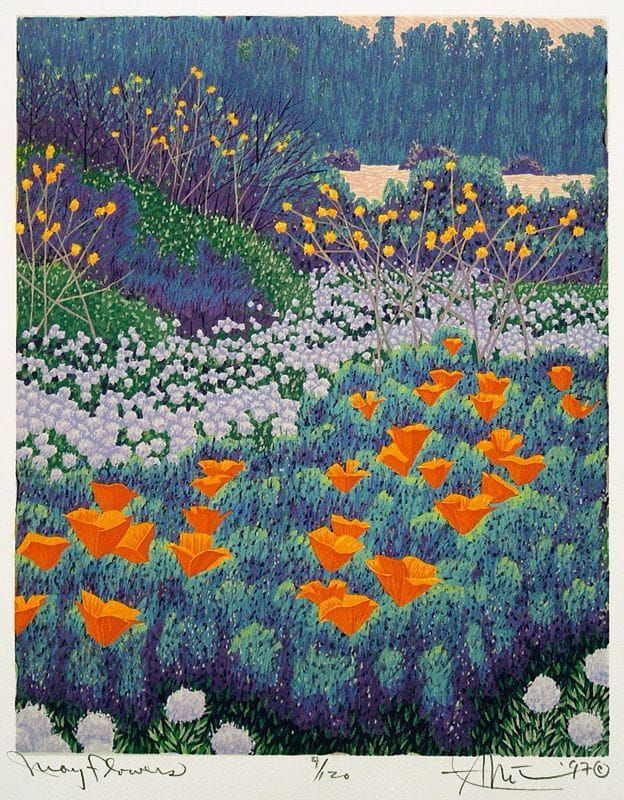
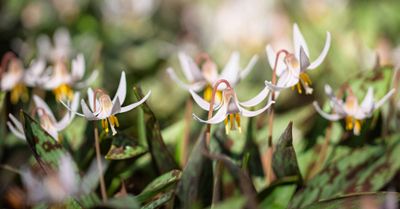
After a cool, moist spring we've be thrown into instant summer and the foliage feels like it emerged in the blink of an eye! All the while, I've been exploring the Cook County Forest Preserves around Chicago to see what is popping up where and paying my respects to the spring ephemerals during their brief emergence.
Each place I go carries a different combination of spring plants, trout lilies here, pedicularis there, garlic mustard (regretably) everywhere… Navigating through each landscape, I'm struck by how it informs the way I see and engage with the world. The longer I spend in each place, the more I feel I become a part of it, and the smaller I feel.
You feel small in the best possible sense of the word, able to blend in, a microcosm of the place you inhabit. And through this you experience the vastness of living space through your body.
Have you noticed this? Have you noticed what happens when you allow yourself to become fully apart of the landscape that surrounds you?
You begin to tap in to the animality of your being: the smells, the patterns of light and shadow, the moisture in the air, and the creature-esque movements of your limbs merging with the contours of land.
You enter into a frame of mind/being which is also the foundation for humility, openness, vulnerability, and beginner's mind. Here, our senses are tuned-in to learn directly from the land, fading out the incessant chatter of intellect.
From this place of embodied presence we can see the landscape for what it is: alive unto itself, an ancient organism overflowing with abundance that we share in, because we are an extension of the landscape, not separate from it. But we tend not to consider ourselves as part of the landscape.
How Does Place Inform Identity?
We tend to think of places in terms of political boundaries. This makes a lot of sense, as we learned to identify with the town we grow up, the high school we went to, the metropolitan area we're closest to, and so on. Of course, we may have loved exploring the forests or prairies of the towns we grew up in, but we still tend to identify more with the town than the landscape.
On my way to a backpacking trip on North Manitou Island almost a decade ago, I realized I forgot to bring a hat. So I went into the gift store in Fishtown before hopping on the ferry to the island and bought a simple, straightforward hat. The graphic on the front was just the outline of all five great lakes. "Ah, home," I thought, "What an appropriate thing to have on my hat... home!"
This has become my go-to hat over the years. My 'cartoon character' hat if you will (like when a cartoon character opens up their closet and they have a dozen of the same outfit they wear everyday...) since I wear it all the time.
So, I'd wear this hat everywhere, at work bartending, around town, on hikes, on other camping trips... And I often got the question: "Are you from Michigan?" To which I'd respond, "No, I'm from Illinois." "Oh," they'd say... "Do you like going to Michigan?"... "Well yeah, but Wisconsin is pretty cool too... Also the dunes in Northwest Indiana are incredible, have you ever been?"
Eventually, I came to understand that more often than not, people saw my hat as a 'Michigan' hat rather than a 'Great Lakes' hat, even though the hat clearly depicted just the Great Lakes. And yes, I do understand that this 'logo' is one that finds its way into more gift shops in Michigan than any other state. I also realize that I bought this hat in Michigan...yeah, yeah, yeah...But still!
My argument stands.
We've learned to see political and social dimensions as the foreground of our awareness, while ecology and wilder dimensions tend to fade into the background. This tendency to see political boundaries when we are actually confronted with ecological systems is not our fault. We were not taught to see ecological systems.
City is Nature
When I first started learning about ecology, I was still living in the thick of the city (I still am but with a subtle yet significant shift in perspective). I assumed that ecological and natural systems were somewhere outside of the city. That this jungle of asphalt and steel did not 'count' as nature (forgetting of course that asphalt and steel didn't just appear out of thin air). I assumed that 'nature' was a place where people seldom went and where 'nature' was free to do its thing.
I let city living creep in on me, so I started to create distinctions like city = not nature, and nature = natural. Part of my own journey as a plant-loving person all holed up in the lively, wonderful, and often very frustrating city of Chicago has been to rediscover the wildness of city living. The more I read about ecology, mycology, plant medicine, food systems, and so on... the more I would go on walks to feel into what I probably thought of then as something like 'diet' nature (i.e. city parks).
Until one unique experience in my early 20's, biking through Humboldt Park in Chicago. As I turned from the bustling North Avenue into the park, I experienced a strong and sensational inversion of foreground and background. Where asphalt, fences, and cars once captured the focus of my attention, now the trees/sky/soil beneath the asphalt/wild critters and flora came to the foreground.
Then, they all blended together as one, and the distinctions I'd previously made between nature and 'non-nature' began to blur.
I remember it being so intense I had to get off my bike and walk around the park for a bit to ground myself...despite already being late for work. As I walked, the flora of Humboldt park gave off a new sense of vibrance and vitality that had probably always been there, but which my heart wasn't previously open to. I felt a deep living presence coming from deep beneath the urban infrastructure generations of humans had laid on top of this land. It was a formative experience, gently guiding me down the path I was destined to walk as an herbalist.
Over a decade later, I'm still learning from this experience, befuddled by the contradictions inherent within it. Yes, our human made constructions are unjust, and our cities are demolishing once vibrant and diverse ecosystems. But perhaps the issues have less to do with the fact that some things are 'human-made' than it does with the fact that our culture is not living in right relationship with earth.
Begin Where You're At
If we want to shift our perspective in a direction that feeds our hearts, souls, and embodied sense of animality, we should start with where we are at. We are immersed in a landscape whether we find ourselves in a meadow, forest, or studio apartment in the thick of the city. Some of these landscapes are more accommodating to our less 'civilized' frame of mind, and some landscapes seem to stand in our way of realizing our enmeshment with landscape and home-space. But if we can find this smallness, this humility, this beginner's mind, we can see the landscapes we inhabit for what they are: in the forest, how do I offer my gifts for the well-being of this place? In the city, listening for the pulse of land still attempting to thrive in such inhospitable conditions, how am I complicit in this human invention gone awry, and how do I live in such a way to restore balance and life?
Perhaps the first step in working towards right relationship is to shift our perspective and understanding of 'home'. You might want to check out the article below on 'bioregionalism' to support this shift in perspective.
Read Next:
No spam, no sharing to third party. Only you and me.


Member discussion